How to Learn Crochet Without Getting Overwhelmed
Crochet looks deceptively simple from the outside. A hook, some yarn, a few stitches. How hard could it be?
Then you sit down to actually learn, and suddenly you’re faced with dozens of stitches with similar names, videos that move too fast, so many different supplies, and what the heck is a gauge swatch???
If you’ve ever opened a tutorial, felt a wave of confusion, and quietly closed the tab again, you’re not alone.
Here’s the good news: crochet doesn’t need to be overwhelming. You just need a slower, gentler way in.
Start With One Stitch (Yes, Really)
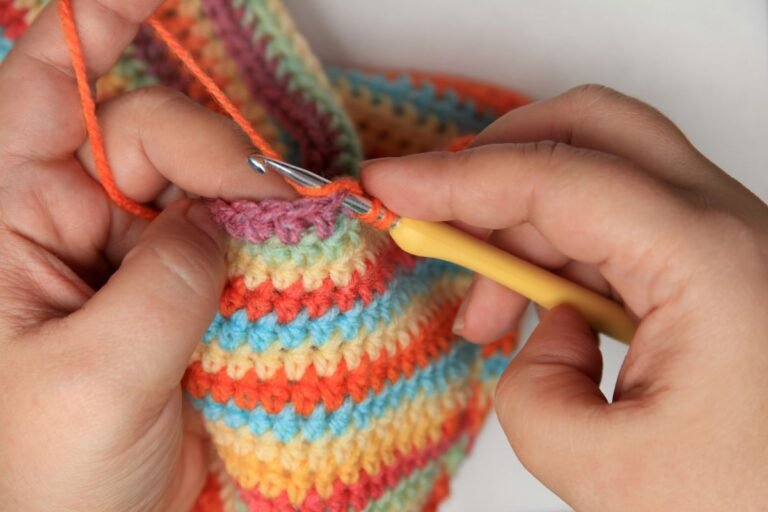
You do not need to learn every stitch to crochet. To begin, you only need a chain stitch and one basic stitch (single crochet or half double crochet).
Okay, two stitches. But that’s it.
These two stitches will teach your hands how to hold the hook, how yarn tension feels, and how stitches stack and grow. Everything else builds from there. If a tutorial jumps straight into complex patterns or stitch combinations, it’s not a beginner tutorial, even if it claims to be.
Choose One Teacher at a Time
One of the fastest ways to feel overwhelmed is bouncing between five YouTube creators, three different crochet blogs, and a handful of Instagram reels.
Each person teaches slightly differently, and that’s confusing when your hands don’t know what they’re doing yet.
Instead, just pick one calm, beginner-friendly tutorial and stick with it for a few sessions. Let your hands catch up before switching sources.
If you prefer learning by video, this beginner lesson from Bella Coco is a wonderful place to begin:
How to Crochet for Absolute Beginners – Bella Coco
It covers holding the hook, making a slip knot, chaining, and single crochet — slowly and clearly, without rushing.
You won’t be missing out by choosing just one source. You’ll be giving yourself space to learn. The others will be there when you’re ready!
Let Your First Attempts Be Messy
Your first rows will be uneven. Your edges will wander. Your tension will change every few chains. This is normal.
Crochet isn’t learned by just reading instructions; it’s learned through muscle memory. Your hands need repetition, not perfection. Instead of aiming for a finished project, try this: crochet a long chain, then pull it apart and crochet it again.
That’s real practice. Nothing is wasted. Once you feel like you’re getting it, you can move on to a small square, and rinse and repeat!
Keep Supplies Simple
Overwhelm often sneaks in through supplies.
You don’t need one hundred hooks, or alpaca yarn (although it is very soft), or dozens of cute patterns. Starting with just a hook and yarn keeps your focus where it belongs, on learning how crochet feels, not on managing tools.
If you’re unsure what’s actually necessary, this guide walks through the basics without the noise:
Beginner Crochet Supplies: What You Actually Need (And What You Don’t)
Start simple. You can always add tools later.
Short Sessions Are Better Than Long Ones
Good news! You don’t need an hour. Ten or fifteen minutes is plenty, especially at the beginning. Crochet asks for your attention, and your hands will get tired faster than you expect.
Stopping early, while things still feel okay, makes it easier to come back the next day. Consistency matters far more than duration.
Progress Isn’t Linear (And That’s Fine)
Some days, everything clicks. Other days, nothing does.
That doesn’t mean you’re regressing. It means you’re learning something new. Even if you’re not sure what it is, exactly. But, if frustration starts to creep in, definitely set the work down, stretch your hands, and come back later.
Crochet will wait.
If crochet feels frustrating at times, it can help to recognize common beginner mistakes and focus on practice instead of finished projects.
Let It Be Enough
You don’t need to master crochet to enjoy it. You don’t need perfect stitches for them to “count.” You don’t need a finished object to justify your time.
Learning crochet is about settling into a rhythm, one stitch at a time, and letting your hands do something steady and quiet.
And I think that’s more than enough.