How to Practice Crochet (Without Needing Something to Show For It)
Many beginners feel a subtle pressure to make every crochet stitch into something useful. Maybe it’s a scarf, a dishcloth, or a granny square meant for a bigger project. But crochet doesn’t actually work best that way — especially at the beginning.
When you’re new, it helps to practice without worrying about finishing a project. Projects aren’t bad, but it’s more important to get comfortable with how crochet feels before focusing on making something.
Here are some ways to practice crochet that will help you feel more confident and less pressured.
Practice Is Not Just a Step; It’s the Real Work
When you’re new to crochet, your hands are learning:
- How to hold the hook
- How tight or loose the yarn should feel
- How stitches stack and line up
- How rhythm develops
None of that requires a pattern.
Practice pieces, even the small, uneven, or imperfect ones, are not failed projects. This is where your skills grow. And they can be fun to look back on later.
If you let practice be enough, crochet becomes more relaxing almost immediately.
The Best Way to Practice: Start Small and Repeat
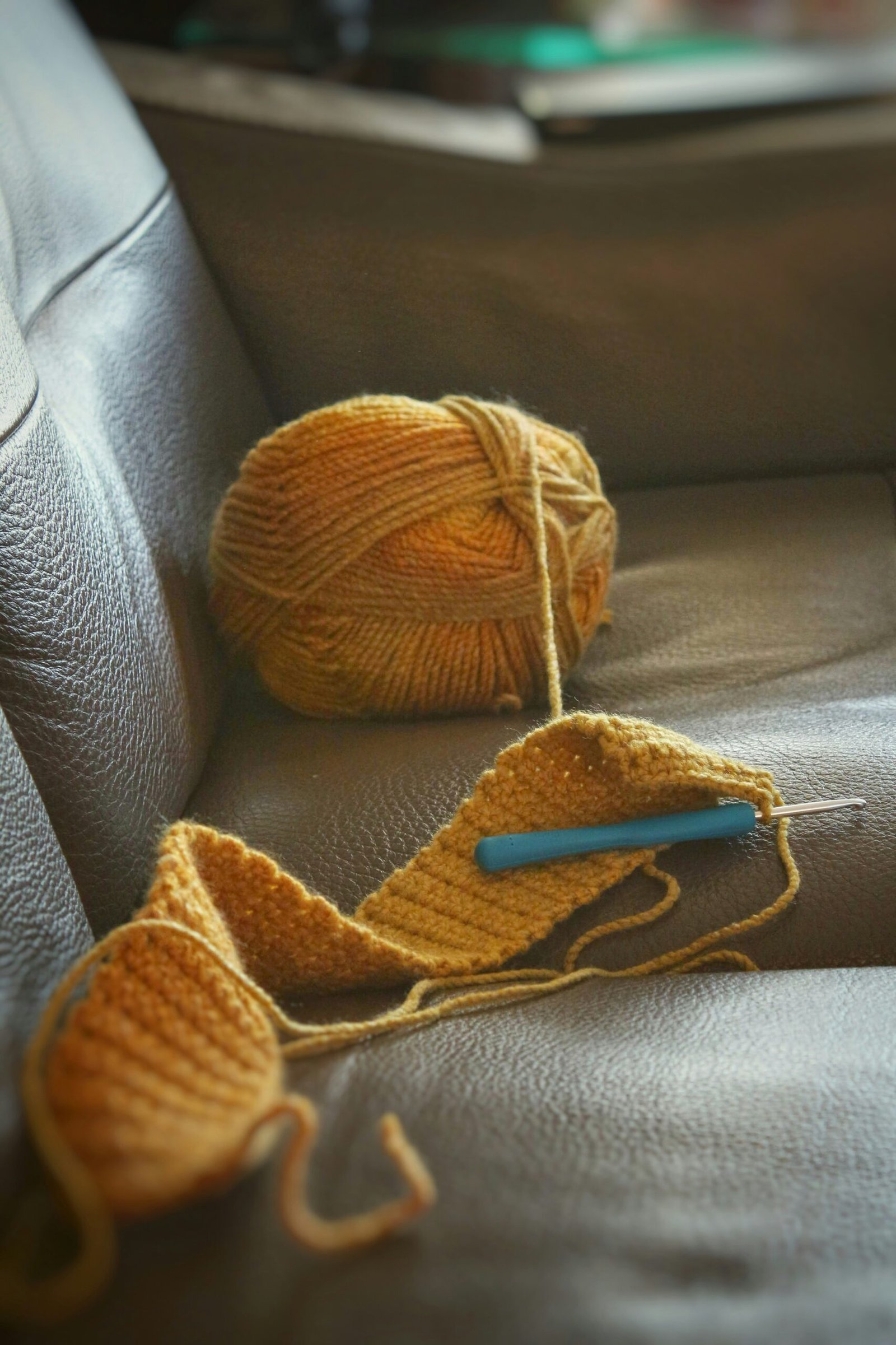
Rather than focusing on a finished project, try making small squares or short strips.
Here’s how you can start:
- Chain 15 to 20 stitches.
- Work back and forth with just one stitch.
- Stop whenever you start to feel tired or frustrated.
That’s all there is to it. Then you can:
- Frog it and start again.
- Try using a different hook size to notice how it changes the look and feel.
- Come back to the same stitch another day and see how it goes.
You don’t have to keep anything you’re not happy with.
If you’re not sure which stitches are best to practice first, this guide walks through the few that matter most at the beginning: Basic Crochet Stitches (That Actually Matter)
It covers the stitches you’ll use in almost every early project without charts, abbreviations, or overwhelm.
Frogging Your Work Means Learning, Not Failing
I want to say this clearly because it matters:
Frogging your crochet isn’t a mistake.
What’s Frogging? Frogging means pulling out your stitches to undo your work – “rip it, rip it” sounds like a frog, get it? It’s not a mistake or failure – it’s a normal part of crocheting that even experienced crafters do. Since the yarn is completely reusable, there’s no waste.
When you pull out stitches and redo them, your hands learn much more than if you just keep going when something feels off. Yarn is reusable, and the time spent practicing isn’t wasted.
Many experienced crocheters frog their work all the time. I do it often, and I’ve been crocheting for years. It’s not because we’re bad at it, but because we’re paying attention.
Let yourself do the same.
Pay Attention to How it Feels, Not How it Looks.
When you practice, don’t worry about how things look.
Instead, pay attention to:
- Does your hand feel tense or relaxed?
- Are the stitches difficult to work into?
- Does the hook move smoothly, or does it catch and resist?
Right now, how it feels is more important than having straight edges. The look will improve as your hands get used to the movements.
Short Sessions Count More Than Long Ones
You don’t need an hour.
Ten or fifteen minutes of focused practice is often more effective, especially when you’re just starting out. Your hands can get tired quickly, and frustration can set in sooner than you might think.
If you stop while things still feel good, it’s much easier to come back and practice again tomorrow, or even later the same day.
Consistency builds skill. Marathon sessions don’t.
Practice Without Pressure Builds Confidence
When you stop worrying about making a finished piece, things start to change.
You might find yourself more willing to try again, or even experiment, make mistakes, but especially notice improvement.
This quiet confidence is what helps projects feel possible and even enjoyable over time.
If you’re still gathering supplies or wondering what actually helps at the beginning, this guide on beginner crochet supplies walks through what’s useful and what can wait.
If learning has felt scattered or overwhelming, this post on how to learn crochet without getting overwhelmed can help you simplify the process.
And if you’re wondering which stitches are worth practicing first, this guide covers the essentials without unnecessary complexity: Basic Crochet Stitches (That Actually Matter)
Let Practice Be Enough
Crochet doesn’t need to produce something impressive to be worthwhile.
Practice stitches.
Messy rows.
Pieces that never become anything else.
These aren’t signs that you’re falling behind; they show you’re learning. Practicing this way, without pressure, makes learning easier and gets you ready for simple projects later.
If you focus on practice as your goal, crochet remains what it should be: steady, grounding, and quietly satisfying. You have all the time in the world for projects.
There’s no rush.
Remember: one stitch at a time.