Your First Cross Stitch Project (Keep It Simple, Keep It Fun)
There’s a moment in learning cross-stitch when everything you’ve read clicks.
You understand the stitch.
The pattern makes sense.
Your supplies are ready.
And you think: Okay… I want to actually make something.
This is that moment.
Your first cross-stitch project doesn’t need to be impressive or complicated. It just needs to help you practice what you’ve already learned, without pressure, perfection, or overwhelm.
Here’s how to choose (and enjoy) your first cross-stitch project.
What Makes a Good First Cross-Stitch Project?
A beginner-friendly project should feel like more practice, not like a test you need to pass.
Look for a project that:
- Has very few colors (1–4 is ideal)
- Is small enough to finish relatively quickly
- Has a clear, simple pattern
Avoid designs that:
- Are full coverage
- Have tiny text or lots of detail
- Use specialty stitches
Your first project should feel welcoming.
Good First Project Ideas
Here are a few options that work especially well for beginners.
A Small Motif
Think:
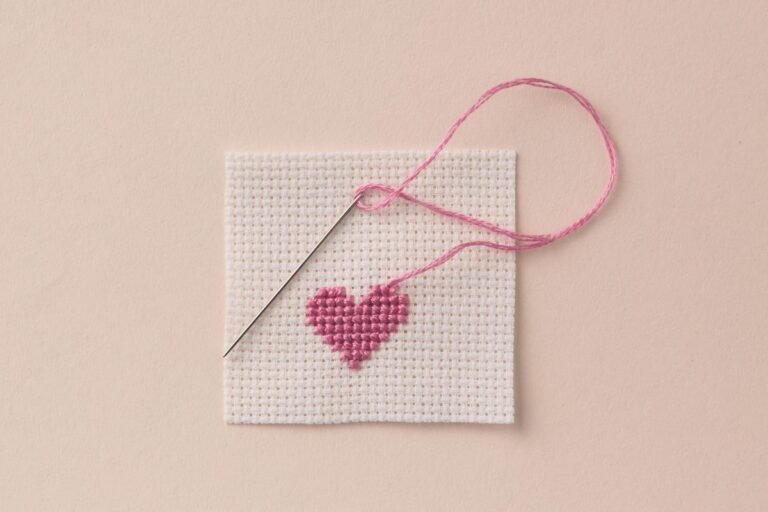
- A heart
- A leaf
- A simple flower
- A star
- A tiny animal or symbol
Small motifs are great for beginners because you see progress quickly, can practice counting without stress, and actually finish something without feeling like it takes forever.
A Single Word or Short Phrase
Short words like “hi,” “calm,” or “home” are great for beginners. Lettering uses simple shapes, helps you build confidence quickly, and often looks charming even if your stitches aren’t perfect.
A Simple Border or Repeating Pattern
Geometric designs or repeating shapes are easy to follow and help you find a rhythm. They also make small counting mistakes less noticeable, which is helpful when you’re just starting. These are great if you enjoy repetitive, meditative work.
A Few Simple Patterns to Get You Started
To help make your first project approachable, I’ve designed a few small, beginner-friendly cross-stitch patterns you can download and use right away. Each one uses a simple motif, needs only a few colors, and is meant to help you practice without pressure.
You can download them here:
- Simple Heart Cross-Stitch Pattern (PDF)
- Beginner Flower Cross-Stitch Pattern (PDF)
- Super Easy Star Cross Stitch Pattern (PDF)
- Easy Strawberry Cross-Stitch Pattern (PDF)
- Beginner Duck Cross-Stitch Pattern (PDF)
- Easy Leaf Cross-Stitch Pattern (PDF)
Pick the one that feels inviting to you. There isn’t a single “best” option.
How to Start Without Overthinking It
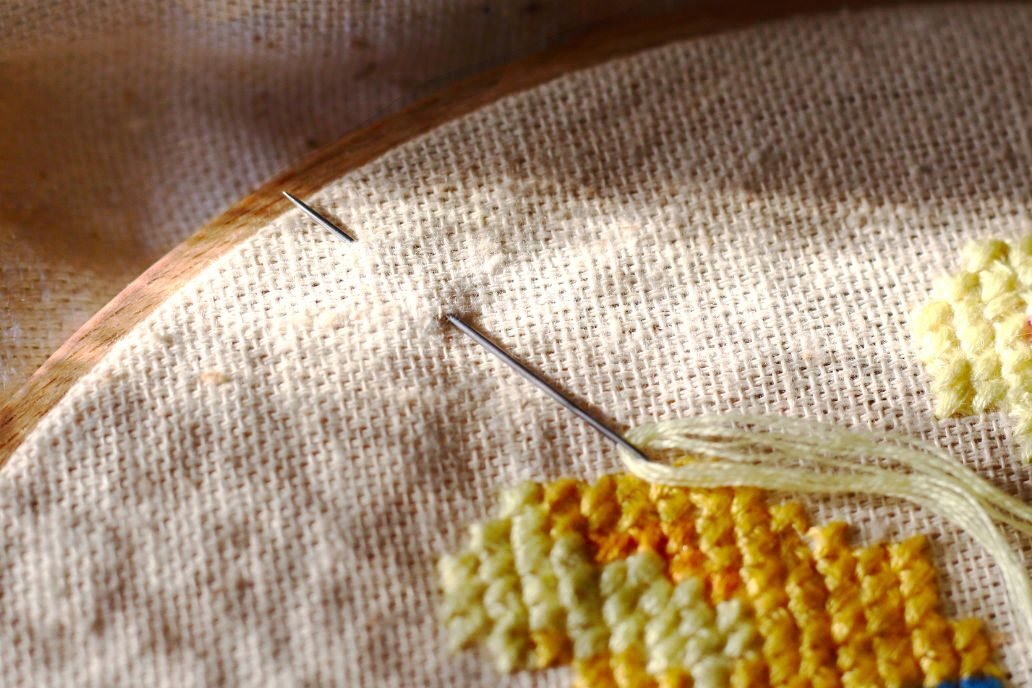
After you choose your project, gather your fabric and pattern. Thread your needle with the suggested number of strands, pick one color to start, and begin stitching slowly.
Focus on the next stitch, then the next one after that.
Cross stitch is about patience, not planning.
What to Expect as You Stitch
Your first project might feel slow, take longer than you expect, and look a bit uneven up close. That’s all normal.
What matters is that the image appears bit by bit, your hands get used to the motion, and you feel more comfortable each time you stitch. Finished doesn’t mean perfect. Finished means you learned something.
When to Stop (Yes, Really)
You can pause your project, put it away for a few days, or decide you’re done even if it’s not “complete.” Cross-stitch will wait for you. There’s no rule that says every project must be finished to be worthwhile.
Why This First Project Matters
This project isn’t about the final result. It’s about trusting your hands, following a pattern calmly, and watching something take shape because of your effort. That confidence will help you with every future project.
If you want to double-check supplies or stitches, these guides are always here.
Where to Go From Here
Once you finish your first project, or even once you start, you’ve learned the most important lesson: You can do this.
From here, you can try a slightly bigger design, use more colors, add backstitch for detail, or explore new patterns and styles. If you want to slow down again, going back to small, simple projects is always an option. Cross-stitch is steady that way.
A Gentle Reminder
You don’t need to rush.
You don’t need to compare.
You don’t need to be “good” to enjoy it.
You just need to show up, thread your needle, and make one stitch.
Then another. And another.
That’s how cross-stitch becomes something you look forward to.
One stitch at a time.