How to Read a Cross-stitch Pattern (No Decoder Ring Required)
Cross-stitch patterns can look intimidating.
At first glance, cross-stitch patterns can look like a confusing grid full of tiny symbols. You might wonder, ‘Am I supposed to just know how to read this?’
But here’s the thing: Cross-stitch patterns look more complicated than they actually are. Once you know what you’re looking at, most patterns follow the same simple logic. You don’t have to memorize everything before you start. Let’s take it slow and go through each step together.
What a Cross-stitch Pattern Really Is
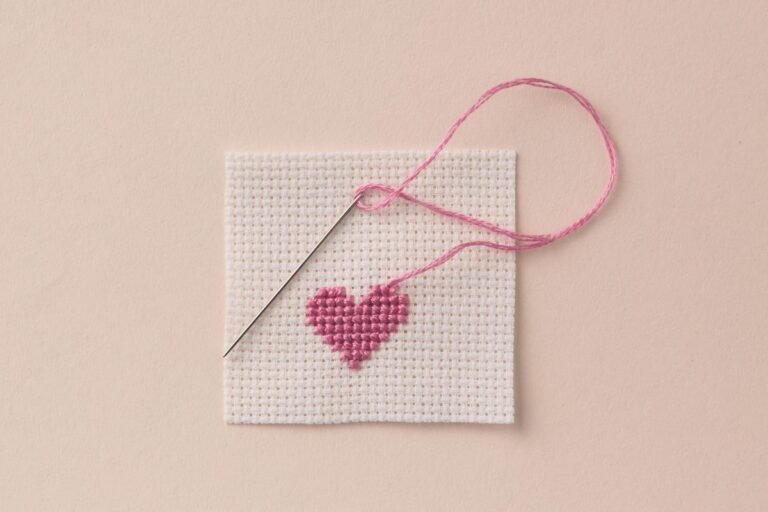
At its core, a cross-stitch pattern is just a map. Each square on the grid stands for one cross-stitch, in a specific color and spot. That’s it. You don’t have to copy the finished picture all at once. Instead, you fill in the grid one square at a time, and the picture appears as you work.
The Grid: Where Counting Comes In
Cross-stitch patterns use a grid, and you’ll often see thicker lines every 10 squares. These thicker lines are like landmarks on a map. They make counting easier and help you stay on track.
You don’t have to count from the start each time. Most people begin near the center or in a clear section and work outward.
Symbols and Colors (Why It Looks Busy)
Instead of showing colors directly, most patterns use symbols. However, you can sometimes find patterns that offer both options.
Each symbol corresponds to a floss color, which is listed in a key or legend next to the pattern. That’s why patterns can look crowded. But when you focus on one symbol at a time, it all makes sense.
You’re not supposed to stitch everything at once.
The Key (This Is Your Friend)
Every pattern comes with a key, which is sometimes called a legend. The key tells you:
- Which symbol matches which color
- How many strands of floss to use
- Whether any special stitches are included
Before you start stitching, take a moment to look at the key. You don’t have to memorize it—just know where it is and what it tells you.
You’ll check it often, and that’s completely normal.
Where to Start (And Why Center Isn’t a Rule)
Many patterns suggest starting in the center. This can help make sure your design is centered on your fabric, so you don’t run out of space on one side. But it’s not required.
Some beginners prefer:
- Starting in a corner
- Starting with the largest color section
- Starting somewhere visually obvious
All of these are valid. The most important thing is to know where you started and to count from that spot each time. There isn’t just one “correct” place to start.
How to Keep Track Without Overwhelm
You don’t need fancy tools to stay organized. Simple options include:
- Highlighting completed sections on a printed pattern
- Using removable stickers to mark your place
- Covering sections you’re not working on with a piece of paper
Work on small sections and finish one color or area before moving on. This helps you avoid jumping around and losing your place.
If You Miscount (It’s Not the End of the World)
Miscounting happens to everyone. If you notice it early, pull out the stitches and redo them. If you notice it later, see if it affects the design. You can fix it if you want, or just leave it and keep going. If the mistake is with light colored floss, you can sometimes stitch over it with the right color.
Most small counting mistakes disappear as you fill in the piece. Cross-stitch is more forgiving than it seems.
Patterns Are Guides, Not Tests
A pattern isn’t something you pass or fail. It’s a guide that helps you move forward one stitch at a time. You can pause, go slowly, and take breaks. It’s okay to make changes or decide something is “good enough.” Cross-stitch isn’t about rushing. It’s about being steady.
If you haven’t learned the basic stitches yet, start here. You only need one to begin.
What’s Next
Now that you know how patterns work, you’re ready for the best part: actually making something.
In the next post, we’ll go through your first cross-stitch project together. You’ll pick a simple design that uses:
- The supplies you already have
- The stitch you already know
- A pattern that won’t overwhelm you
If you want to practice reading a pattern with something small and easy, I’ve shared a few simple beginner cross-stitch patterns here.
No pressure.
No perfection.
Just one stitch at a time.