The Basics (The Cross-Stitches That You Really Need)
Ok, here’s the good news: You don’t need to learn dozens of stitches to cross-stitch. You really just need one main stitch for most cross-stitch projects, and there’s one extra stitch you can use at the end if you want to add some detail.
That’s it.
That’s one reason cross-stitch is so great for beginners. You get to focus on finding your rhythm instead of trying to remember a bunch of techniques.
Let’s go over the stitches you really need to know.
The Cross-Stitch (the Rock Star)
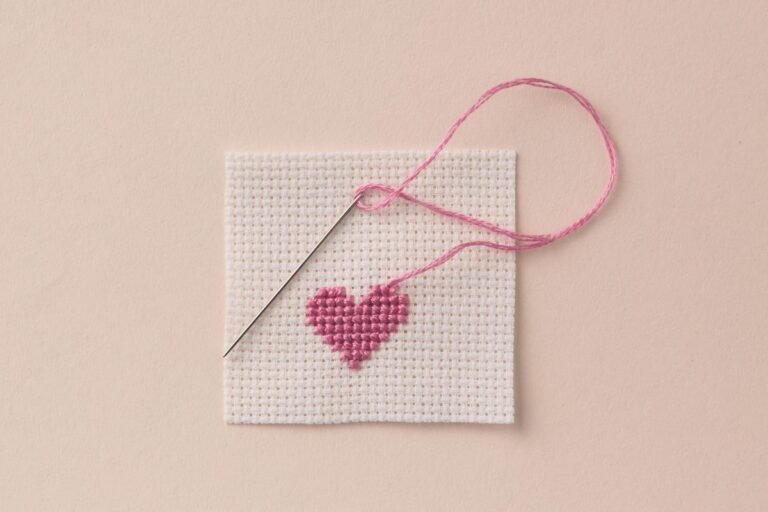
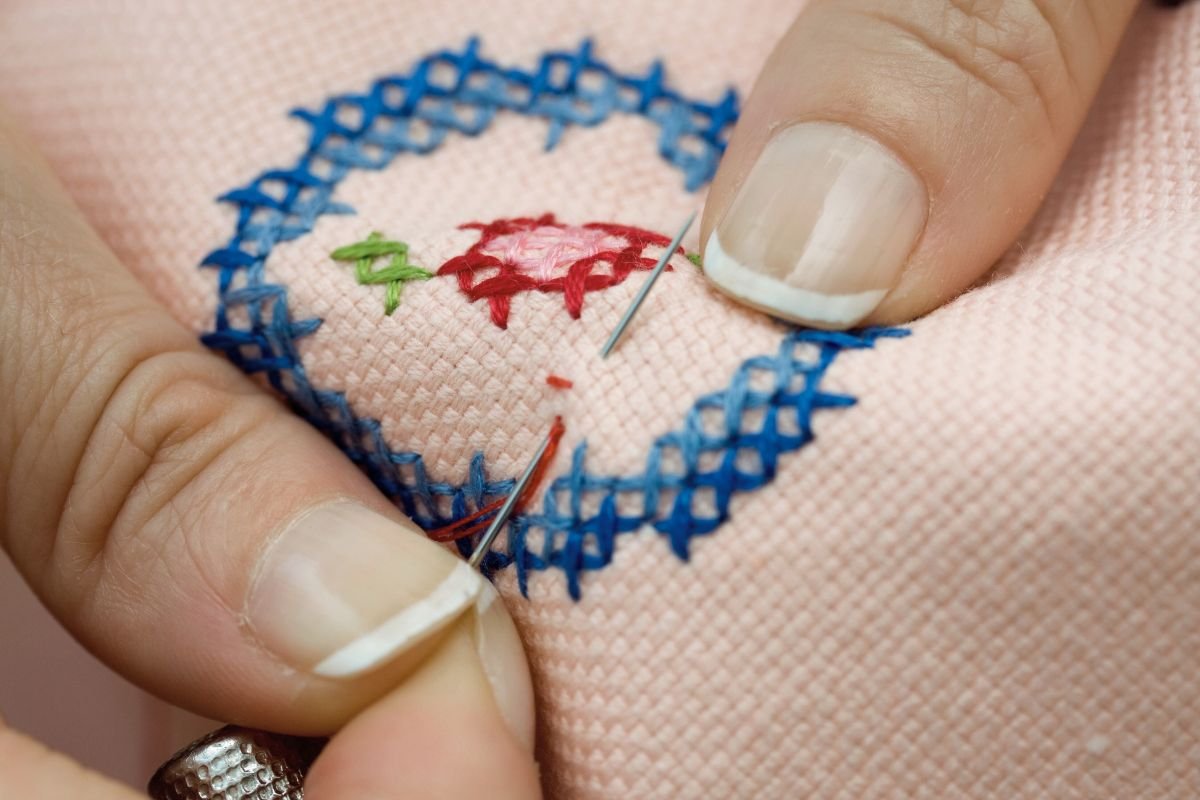
This stitch gives cross-stitch its name. It’s just a small X made by two diagonal stitches. Almost every pattern you find is made mostly with this one stitch.
How to do it
This is gonna blow your mind. Each cross-stitch is made up of:
- One diagonal stitch
- Followed by a second diagonal stitch crossing over it
That’s really all there is to it. The important thing is to be consistent. If all your top stitches go the same way, your work will look neat and purposeful.
It creates the image in the pattern, it’s repetitive and easy to learn, it builds rhythm quickly, and it’s very forgiving for beginners. Once your hands get used to this motion, you’re golden.
(Sometimes, But Not Always) Half Cross-Stitches
Some patterns use half cross-stitches. Just one diagonal instead of a full X. These are usually included to add shading, create lighter areas, or reduce bulk in certain sections. As a beginner, you don’t need to worry about these. If a pattern uses them, it will let you know. Otherwise, you can skip them for now.
Backstitch (Optional, But Helpful)
Backstitch is often used at the very end of a project to:
- Outline shapes
- Add small details
- Make text easier to read
- Give your project a polished look
You don’t have to use it in every pattern, and a lot of beginner projects leave it out. When you do use it, it’s usually simple and added after you finish all your cross-stitches. If you’ve done embroidery or hand sewing before, backstitch should feel familiar.
What You Don’t Need to Learn Right Now
You can safely skip:
- Specialty stitches
- Decorative borders
- Fractional stitches
- Complex blends
These techniques are for adding detail to advanced designs, not for learning the basics. Cross-stitch works best when you keep it simple. Once you feel ready to try these stitches, Your First Cross-Stitch Project can guide you through an easy and manageable start.
Consistency Matters More Than Perfection
Early on, your stitches may feel uneven, sit at slightly different angles, or look less tidy than the examples. That’s completely normal. Cross-stitch rewards consistency over time. As long as you cross your stitches the same way each time, keep your tension relaxed, and move steadily through the pattern, your stitches will even out on their own over time.
Learning the Stitches Slowly Is Enough
You don’t have to spend hours practicing stitches before you start a project. Most people learn cross-stitch by doing: Start with a small section, follow the pattern, and let your hands get used to the motion as you work. If you ever feel unsure, it’s fine to pause, take a closer look, and keep going when you’re ready.
Cross-stitch isn’t going anywhere.
What’s Next
Now that you know the stitches you’ll actually use, the next step is understanding how cross-stitch patterns work, and why they look more intimidating than they really are.
In the next post, we’ll break down:
- How to read a cross-stitch pattern
- What the symbols mean
- How to keep track without feeling stressed
And when you’re ready to put these stitches to use, your first project is waiting.
No rush.
No pressure.
Just one stitch at a time.